- Introduction
- What is Pride In Place – Hartcliffe Trailblazer, in short.
- What Pride in Place could mean for the local community
- Getting involved: why showing up counts
- The boundary question — and why it’s coming up so early
- The Ignite Plan survey — and why it still matters
- The role of the Chair — and why independence matters
- A moment of opportunity, not a finished picture
Introduction
This weekend I attended the first Pride in Place consultation for Hartcliffe, Bristol South — marking the start of a ten-year Trailblazer programme that could shape how funding, power and decision-making work across Hartcliffe, Withywood and neighbouring communities. While the event was presented as an early-stage engagement, it raised important questions about inclusion, boundaries, and how genuinely community-led this process will be. It felt like an important moment — not because all the answers were there (they weren’t), but because this marked the beginning of a process that could shape how investment, power and decision-making work in our community over the next decade.
Pride in Place promises something different: long-term funding, new powers, and a commitment to putting local people at the centre of decisions about their own neighbourhood. But as with any programme built on data and maps as well as lived experience, the detail matters — especially when it comes to who is included, who is excluded, and who feels able to take part.
If you live in Hartcliffe, Withywood, Hengrove of Whitchurch – you may have been invited to the drop in session at Merchants Academy Secondary School. Yes, you heard right, for the Hartcliffe Pride in Place Trailblazer – residents from all of those areas would have been invited. But why? What is trailblazer? How can I get involved?
These are just some of the questions I am going to answer, focusing on some of the most important issues raised, along with some questions that are left to the imagination of those involved.
The aim of the event was to; learn more about the Pride in Place programme, hear what’s planned over the coming months, ask questions & to find out how local residents and community groups can get involved.

The event is one that resisdents and local community voluteers were invited to attend by Karin Smyth MP, who is the Labour MP for Bristol South.
The 3 sessions were a great way to break up the event into small chunks, followed by a mini question time of any burning questions or issues that have been left itching away since the announcement of these funds.
Unfortunately, I only managed to stay for the initial session, so my remarks are relating to this alone, and cannot be taken in any way towards the second two sessions, which may well have been entirely different to my experience.
As this was an early-stage engagement, as advertised, it was great to hear a bit about the background of the Pride in Place, to understand that learnings can be made with relation to other Pride in Place locations, including Weston Super Mare, and also great to hear that nearly everyone at the event were frustrated with the same things, and also wanted to know more about the same things too.
So, lets dive into it!
Arriving at 10am, before the first session, we were welcomed by Bristol City Councils Community Development Team. I know this team from experiences with Spacemakers, Ignite Plan and many other events I have been part of since 2022 when I first started voluteering. In addition, I also saw many long-standing local volunteers, organisers, and residents
The team that were holding the event were a team formed byTerry Black ofBristol City Community Development Team – who as always pulled an amazing event out the bag. Thanks to the others from the team including Lynn Parfitt, Sarah Dailly and Heather Barham. In addition to this team, the formerly mentioned Karin Smyth, along with the Trailblazer team themselves in John Smith & Penny Germon were also there for any questions. These were all made known at the start of the event, as those who are responsible for the “project”.
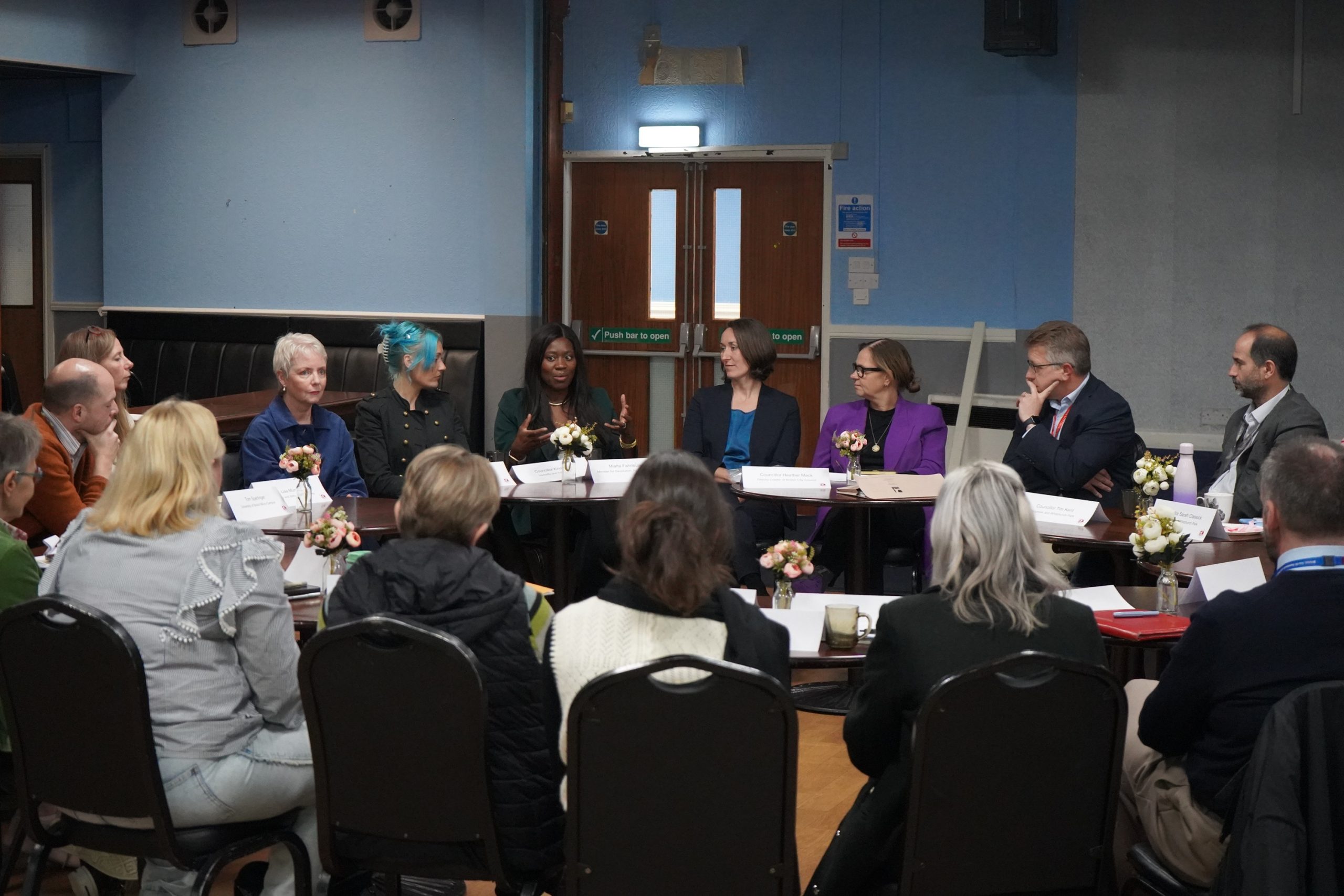
The event started with a PowerPoint presentation, with Terry and Karin talking about what the trailblazer money can be used for, the area it covers and what this means for Hartcliffe. It was also mentioned as a key point that all are available to be involved. If you were present, you could get involved.
What is Pride In Place – Hartcliffe Trailblazer, in short;
Pride in Place is a government programme that invests long-term funding and decision-making power directly into local neighbourhoods. It brings together residents, councils, businesses and community organisations to decide how money is spent, unlock new local powers, and strengthen communities by focusing on what people who live there say they need. The aim is to create thriving places, rebuild trust, and give communities real control over shaping their future.
This marks the start of a long-term, community-led investment programme in Hartcliffe, backed at every level of government, designed to shift power to local people and deliver visible change in an area that has historically been overlooked.
What Pride in Place could mean for the local community
Hartcliffe has been selected as one of only 25 trailblazer neighbourhoods nationally, with £20 million committed over ten years. That alone is significant. But what feels more important is the stated intention behind the programme: that decisions about priorities, investment and change should be shaped by the people who live here, not imposed from elsewhere.
The consultation felt like an early attempt to open that door. Residents were invited to share concerns, ideas and hopes for the area — from services and spaces, to safety, opportunity and connection. This wasn’t about final decisions; it was about setting direction. And at this stage, voices matter enormously.
Getting involved: why showing up counts
One clear message from the consultation was that this is not a one-off conversation. Any changes to the current boundary, appointment of the Chair (which can be a paid role) and many other items need to bne decided and submit by July 2026, and it has been made clear that plans — including the proposed boundary — are not fixed.
That matters, because programmes like this only reflect a community if the community stays involved. You don’t need policy knowledge or professional experience to contribute. Lived experience counts. Knowing what works, what doesn’t, and where people feel overlooked is exactly the insight this programme claims to value.
Staying engaged also means talking to neighbours, encouraging those who feel sceptical or excluded to attend, and making sure the same few voices aren’t the only ones heard.
This was highlighted throughout the session, which emphasised that although the team from the Council has been chosen – the chair should be someone independant, and the and those involved are not decided and can be anyone from the community – ideally some of those who were present at the session.
The boundary question — and why it’s coming up so early
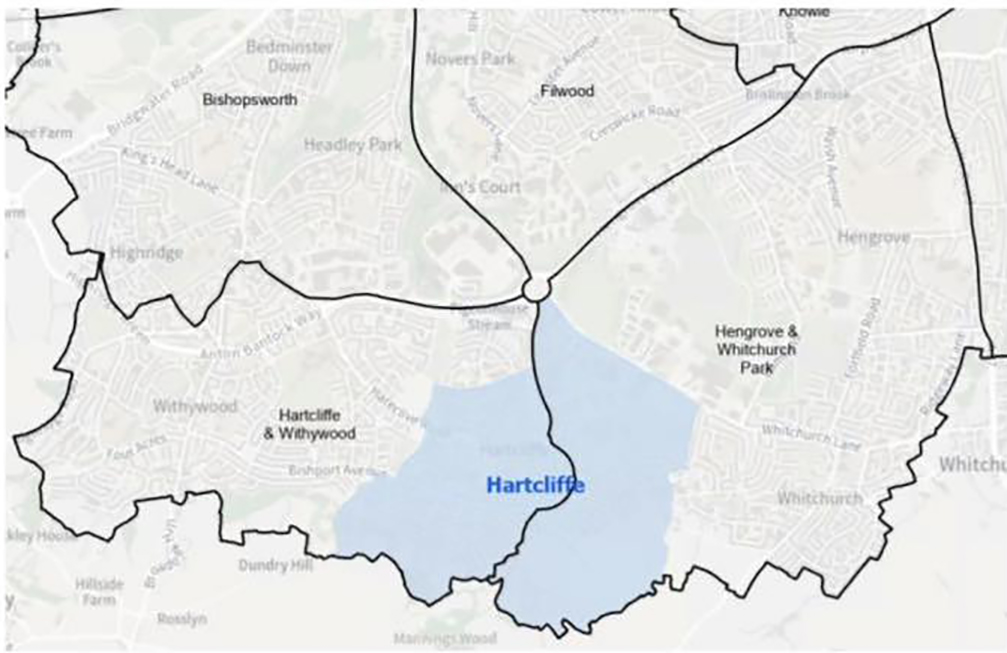
One of the strongest and most emotional discussions at the consultation was about the proposed Pride in Place boundary.
At present, the suggested boundary appears to include only part of what most people would locally recognise as Hartcliffe, while also extending into neighbouring Hengrove and Whitchurch wards. At the same time, Withywood — an area that faces very similar challenges and levels of deprivation — is entirely excluded.
Several residents from Withywood attended the consultation and voiced real frustration. Some asked openly whether it was even worth them being there if their area was not included. That question alone should give pause. A programme designed to empower communities risks undermining trust if people feel their lived reality doesn’t match the lines drawn on a map.
It was also notable that, to my knowledge, no residents from Hengrove or Whitchurch were present at this first event — raising questions whether they actually class themselves are Hartcliffe residents. From my knowledge of a selection of residents who live in that area, they are not from Hartcliffe. Are they just too far away to feel included? Do they not want to be included? Either way, I feel the boundary reach as far as it does outside of what locals would class as Hartcliffe is a complete injustice in itself.
For example, in its current form, Spacemakers is NOT classed as Hartcliffe. The whole of Willmott Park is NOT classed as Hartcliffe. Fulford is NOT classed as Hartcliffe. Gatcome Road is NOT part of Hartcliffe. The Top Shops (next to where The Harriers Pub used to be) is NOT part of Hartcliffe.
Adding to the irony, the consultation itself was held at Merchants’ Academy Secondary School, which most local people would identify as being in Withywood, not Hartcliffe — and which does not sit within the proposed boundary at all. That detail may seem small, but it highlights the disconnect that can arise when statistical boundaries don’t align with community identity.
To be clear, the boundary has been explained as being based largely on central government data, from the Medium Super Output Area — and organisers have stated that it can be reviewed and changed as part of this consultation process. That openness is welcome. But data alone cannot capture how communities function socially, culturally, or practically. This is exactly where local knowledge needs to sit alongside the statistics.
If Pride in Place is truly about giving power back to communities, then listening carefully to how people define their own neighbourhoods — and who feels they belong — is essential.
The Ignite Plan survey — and why it still matters
Another question raised during the session related to the Ignite Plan survey, which was carried out across Hartcliffe and Withywood, and whether it is relevant to the Pride in Place Trailblazer — particularly given that Withywood is not currently included within the proposed Trailblazer boundary.
It’s important to clarify the timeline and purpose here.
The Ignite Plan community survey began in March 2023, well before Pride in Place or the Hartcliffe Trailblazer were announced. At that point, residents from Hartcliffe and Withywood defined the area themselves, based on how people locally understand and experience their neighbourhoods — not on a Trailblazer boundary that did not yet exist.
The Ignite Plan and Pride in Place are two separate processes. The Ignite Plan was developed as a community-led vision for the area, while Pride in Place is a government-funded investment programme with its own criteria, governance requirements and timelines. One does not replace the other.
However, separation does not mean irrelevance.
The Ignite Plan captures lived experience, priorities and concerns directly expressed by residents of Hartcliffe and Withywood. As such, it can absolutely be used to help inform and guide Pride in Place decision-making. The survey results can influence outcomes, highlight shared challenges, and provide evidence of what communities in this part of Bristol say they need.
Equally, the boundary used within the Ignite Plan can be considered as guidance — particularly where it reflects how people define their own community, rather than how areas are divided for statistical or administrative purposes.
In that sense, the Ignite Plan offers something Pride in Place cannot generate on its own: a pre-existing, community-defined understanding of place. Ignoring that insight would risk repeating the very disconnect this programme is meant to address.
For more information on the Ignite Plan itself, visit their website or download the survey results via either of the below links;
Ignite Website – https://igniteplan.co.uk/
Survey Results
Abridged Results – https://drive.google.com/file/d/14P5PLeDFg_PIzX2ls_nc0CAyMp0Kx9z_/view
Full Report – https://drive.google.com/file/d/1OJtr0N47q3vxbCi_qiHLvdosb5EMEAHj/view
The role of the Chair — and why independence matters
Another important point raised during the consultation was the appointment of the Pride in Place Chair, and how that person will be selected.
The Chair role is significant. This person will not be part of the Trailblazer delivery team or the Council structure, but an independent appointment, responsible for overseeing the programme, guiding decision-making, and helping ensure the process remains accountable to the community. It was also made clear that this role may be a paid position.
At this stage, no Chair has been appointed. The role, the selection process, and the criteria for appointment are still to be agreed and submitted by July 2026. Importantly, it was emphasised that the Chair does not need to come from existing institutions or organisations — they could be someone from the local community.
That independence matters. The Chair will play a key role in shaping priorities, mediating competing interests, and setting the tone for how genuinely community-led this programme becomes. Who holds that position — and how transparently they are chosen — will say a great deal about whether Pride in Place delivers a real shift in power, or simply a new structure around old ways of working.
For residents, this is not a background governance detail. It is an opportunity to ask questions, stay engaged, and help shape what leadership looks like in practice — before decisions are locked in.
A moment of opportunity, not a finished picture
This first consultation felt like a genuine opening rather than a tick-box exercise. But it also surfaced some uncomfortable questions early on — particularly around inclusion, identity and fairness. That’s not a failure of the process; it’s a sign of why consultation matters.
There is still time to shape this. The boundary is not fixed. The priorities are not final. And the success of Pride in Place will depend less on the funding announcement, and more on whether people continue to show up, speak up, and challenge things that don’t feel right.
If this programme is going to live up to its promise, it needs to be shaped not just by data, but by the voices of the people who call this place home.
This article forms part of ongoing coverage of the Pride in Place Hartcliffe Trailblazer and its impact on Hartcliffe, Withywood and surrounding Bristol South communities.
Comments are closed